Gordon Ramsay Beef Wellington Recipe is not just a dish; it’s a culinary experience that pushes the boundaries of home cooking. I remember my first attempt at making it. The tender beef, the flaky pastry, and the savory duxelles were all in my mind, yet when the clock struck time to slice, what lay before me was a soggy mess that tasted nothing like the masterpiece I had envisioned. The kitchen echoed with the sizzle of the beef in the pan, the aroma of fresh herbs and garlic tantalizing my senses, only to be met with disappointment. But then, as I revisited the recipe, something clicked. I dissected each step, feeling a surge of confidence with each successfully executed technique—the perfect sear, the balance of flavors, the timing of resting. I realized this method would forever redefine how I approach beef.
The day I pulled off my first successful Gordon Ramsay Beef Wellington was a transformative moment. The golden brown crust shone like triumph itself, the juices ran clear and flavorful, and the blend of textures was nothing short of exhilarating. I’m here to share the hard-earned lessons that turn this seemingly daunting recipe into one you can master with precision. Let’s get to work.
Mastering the Gordon Ramsay Beef Wellington: Where Many Go Wrong
The Gordon Ramsay Beef Wellington recipe is a showstopper, but it’s not without its pitfalls. If you want to elevate your culinary game, you need to know where most cooks stumble.
Overcooking the beef: The core of your Wellington is that beef fillet. If you overcook it, you defeat the whole purpose. Always aim for that perfect medium-rare, around 130°F to 135°F.
Neglecting the resting phase: Resting isn’t just a suggestion; it’s essential. Letting the beef rest lets the juices redistribute, preventing a waterfall of flavor when you slice into it. Don’t skip it—10 to 15 minutes is key.
Using the wrong pan: A crowded or low-quality pan can lead to inadequate heat distribution, jeopardizing the sear on your beef. Use a heavy-duty skillet that retains heat well.
Not adjusting seasoning through layers: Each layer—the beef, the duxelles, the pastry—needs proper seasoning. If the beef’s seasoning is off, it will carry through, and you’ll end up with a bland Wellington.
Ignoring pastry temperature: The puff pastry must be cold when it envelops the beef. If it’s warm, it will melt before the beef cooks properly, leading to a soggy bottom.
Ramsay’s Philosophy: The Essence of Flavor
In Gordon Ramsay’s world of cooking, flavor is paramount, and he’s relentless about it. He underscores that “color equals flavor,” emphasizing how you sear the meat to achieve the rich browning that intensifies taste. Maintaining disciplined heat control while cooking the beef, along with precise basting, builds layers of flavor. Each step calls for focus—no distractions in the pan, just the components working in unison. Attention to detail and a refusal to cut corners are essential to mastering this dish.
Making It Work in My Kitchen
When I adapt the Gordon Ramsay Beef Wellington recipe at home, I stick to the fundamentals but make a few adjustments that fit my space and equipment. For instance, my go-to pan is a cast-iron skillet, ensuring an even sear. Ramsay’s techniques for pan heat and basting are untouched—I respect the foundation. Yet, I sometimes introduce a touch more aromatics into the duxelles, enhancing that earthy flavor.
I rely on the touch test rather than a thermometer for the beef once it’s resting; I’ve grown accustomed to sensing just when it’s perfect. While I typically follow the rules, I’ve been known to alter the resting process for the pastry—sometimes I’ll slice the beef earlier to give the pastry a delightful crisp when it’s fully baked. Every cook finds their measure of flexibility; it’s about knowing when to push the boundaries.
Ingredients for Success
Main ingredients:
- Beef fillet (center cut)
- Puff pastry
- Mushrooms (finely chopped)
- Prosciutto
- Dijon mustard
Optional finishing additions:
- Egg wash (for glazing)
- Fresh thyme
- Sea salt and black pepper
- Butter (for enhanced basting)
The Method: Elevating Your Gordon Ramsay Beef Wellington
To nail that Gordon Ramsay Beef Wellington recipe, precision and timing are critical.
Start by properly trimming your beef fillet. Season it generously with sea salt and black pepper. In a hot, heavy-duty pan, sear the beef on all sides until it’s a beautiful golden brown. This should take about 2-3 minutes per side. Remove it from the pan and let it rest while you prepare the duxelles.
In the same pan, add a little more oil if necessary, then throw in your finely chopped mushrooms with a pinch of salt. Sauté them until they release their moisture and turn golden brown. You’ll want this mixture to be dry—aim for an almost paste-like consistency. Add finely chopped fresh thyme near the end for flavor, then spread the duxelles over the beef fillet and cool it down.
Next, lay out your prosciutto on a piece of cling film, slightly overlapping each slice. Spread the cooled duxelles over the prosciutto, then place your beef on top. Roll everything tightly using the cling film and chill it in the fridge for at least 15 minutes; this helps it hold its shape.
Once chilled, roll out your puff pastry on a floured surface. Remove the cling film from your beef and lay the beef in the center of the pastry. Fold the pastry tightly around the beef, sealing the edges well. Brush with egg wash to give it that golden finish.
Preheat the oven to 400°F. Place the wrapped Wellington on a baking tray lined with parchment paper, and score the top lightly with a knife to allow steam to escape. Bake in the oven for 25-30 minutes, aiming for an internal temperature of 130°F for medium-rare.
Once baked, remove the Wellington from the oven and let it rest for 10-15 minutes. This time is crucial for maintaining juiciness. For the finishing touch, you might want to baste the Wellington with a little melted butter right before serving for an extra layer of richness.
Slice and serve, and watch as everyone marvels at what you’ve created. The Gordon Ramsay Beef Wellington is an orchestration of flavors and techniques that can elevate your cooking to a whole new level.

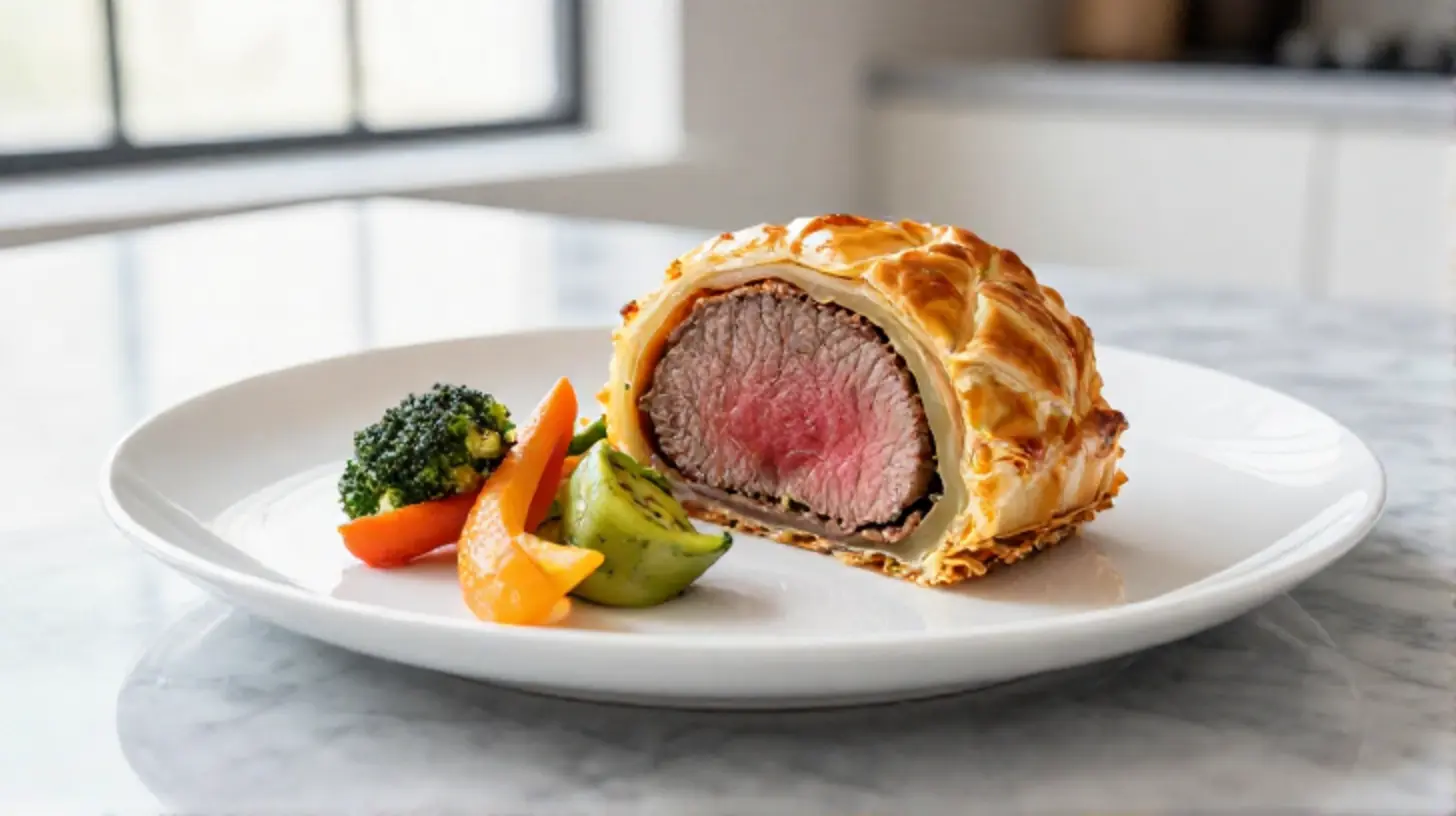
Gordon Ramsay Beef Wellington Recipe
Rate this RecipeIngredients
Equipment
Method
- Preheat your oven to 200°C.
- Season the beef with salt and black pepper. Heat olive oil in a skillet over high heat, and sear the beef for 2-3 minutes on each side until browned. Remove and let it cool.
- In the same skillet, add the mushrooms and cook until moisture evaporates. Remove and let cool.
- Spread the pâté over the cooled beef, then top with the mushroom mixture. Roll the beef tightly in the puff pastry, sealing the edges.
- Brush the pastry with the beaten egg, and score it lightly.
- Place the Wellington on a baking sheet and bake for 25-30 minutes until golden brown.
- Allow it to rest for 10 minutes before slicing and serving.
Nutrition
Notes
Tried this recipe?
Let us know how it was!Expanding Your Culinary Repertoire with Gordon Ramsay Dishes
For those interested in trying a different twist on the classic Wellington, the Gordon Ramsay Venison Wellington offers a rich, gamey alternative that can impress any dinner guest.
As you perfect the art of making your Wellington, consider complementing it with Gordon Ramsay’s stuffing for turkey, which can provide an excellent side dish for festive occasions.
To further enhance your meal, mastering Gordon Ramsay’s Steak Diane can bring a delightful contrast in flavors and textures, showcasing your culinary skills.
Common Pitfalls and Their Solutions
Excessive surface moisture
Ensure your beef is thoroughly dried with paper towels before searing. Any surface moisture can hinder the Maillard reaction, resulting in a lack of color and flavor.
Inconsistent pan heat
Always preheat your pan until it’s smoking hot before placing the beef. Consistent high heat is crucial for achieving a perfect sear that locks in juices.
Overlapping flipping frequency
Only flip the beef once during searing for an even crust. Too many flips can prevent proper caramelization and texture development.
Insufficient resting time
Allow the beef to rest for at least 10 minutes before slicing. This crucial step enables juices to redistribute, resulting in a more flavorful and moist Wellington.
Tactical Approaches for Winning Flavors
Choosing a cast iron pan works wonders, as it maintains heat effectively and develops an ideal crust on the beef. When butter basting, aim for a rhythm that alternates between spooning and allowing the fat to pool around the meat, ensuring rich flavor and moisture throughout.
Ensure the steak is at room temperature before cooking to achieve an even cook throughout. This helps prevent a raw center and promotes a beautifully cooked exterior.
Implement a resting strategy of at least 10 minutes post-cooking, as this allows for rebound in texture and optimal moisture retention in the meat.
When slicing, always cut against the grain. This technique breaks up the muscle fibers, ensuring each piece is tender and easier to chew.
Elevating Your Beef Wellington with Flavor Enhancements
Herb-infused oil
Add a couple of sprigs of rosemary or thyme to the oil when searing the beef. This infusion of herbs occurs during cooking and enhances the beef’s natural flavor.
Black garlic mash
Incorporate black garlic into your mushroom duxelles to deliver an umami-rich, sweet taste. This variation should be applied while blending the mushrooms, allowing the flavors to meld beautifully.
Foie gras layer
Introduce a layer of foie gras between the beef and pastry for an intense richness. Apply this right before wrapping the beef to achieve maximum impact without compromising the pastry.
Balsamic reduction glaze
Drizzle a balsamic reduction on the plate when serving for a sweet and tangy contrast. This elevates the dish at the final presentation stage, enhancing both flavor and aesthetics.
Proper Storage and Creative Uses for Leftovers
For fridge storage, wrap any leftover Beef Wellington tightly in plastic wrap or aluminum foil to maintain moisture and prevent drying. Store it in the refrigerator for up to two days.
When reheating, preheat the oven to a low temperature of 350°F and place the Wellington on a baking sheet. Cover it with foil to preserve moisture, heating until the internal temperature reaches 140°F.
For practical leftover uses, consider slicing the Wellington into sandwiches using fresh artisan bread, or chop it to create a rich beef stew. Alternatively, dice it and incorporate it into a savory breakfast hash for an elevated morning meal.
Common Inquiries on Beef Wellington Mechanics
How do I choose the right cut of beef for the Wellington?
Opt for tender cuts like filet mignon or tenderloin. These cuts are ideal due to their texture and ability to stay juicy during the cooking process.
Why is resting time important after cooking Beef Wellington?
Resting time is critical as it allows the juices to redistribute within the meat, ensuring that each slice is both deliciously moist and flavorful. Skipping this step can lead to dry and unappealing results.
Should I use oil or butter for searing the beef?
Using a combination of both is ideal. Start with oil for a high smoke point, then add butter for flavor as it cooks, ensuring better browning and richness in taste.
Can I make the Wellington ahead of time?
Yes, you can assemble it ahead, but it’s best to bake it just before serving. Refrigerate it unbaked for up to 24 hours and then bake directly from the fridge for the best results.
How thick should I slice the Beef Wellington?
Aim for slices that are about half an inch thick. This thickness ensures that the meat stays succulent, and also displays the layers of pastry and duxelles effectively.
Mastering Your Skills with Precision Techniques
Executing this Gordon Ramsay Beef Wellington recipe can elevate your cooking to restaurant-quality results. By applying precise methods, you can confidently produce a dish that impresses every time. Don’t second-guess your instincts—embrace these techniques and approach your culinary endeavors with purpose. Now, it’s time to take action and bring this dish to life with intent and precision.