Gordon Ramsay Sticky Lemon Chicken Recipe was my introduction to transforming a simple ingredient into something magical. I remember the sizzling sound of chicken hitting the pan, the sharp scent of zest and garlic intertwined with the rich aroma of browning butter. My first attempt? A complete disaster. The chicken was burnt on the outside and raw inside, a casualty of my inexperience with heat control. But at that moment, something clicked. I realized that mastering the technique—particularly the timing and the basting—could elevate this dish from mundane to extraordinary. This technique has changed how I approach cooking chicken forever, and I’m about to break it down for you with absolute confidence.
Getting It Wrong: Common Pitfalls in Gordon Ramsay Sticky Lemon Chicken Recipe
Underestimating Heat Control
Many home cooks fail to appreciate the importance of managing the heat. If your pan is too hot, the outside of the chicken may char while the inside remains undercooked. Start with medium-high heat and adjust as needed to maintain a steady sizzle.
Not Timing the Rest Properly
Timing is everything, especially when it comes to resting the chicken after cooking. Skip this step, and you’ll lose all those beautiful juices. Always let your chicken rest for about five minutes to ensure it doesn’t dry out.
Ignoring Basting Techniques
Basting is critical in this recipe. If you don’t frequently spoon the hot, flavorful butter over the chicken, you miss out on developing richness and moisture. Remember, this is where the flavor is concentrated.
Using the Wrong Pan
Your choice of pan matters. Non-stick surfaces don’t allow for proper browning, while a stainless-steel skillet fosters those critical fond flavors. Use a good heavy-bottomed skillet that retains heat effectively for the best results.
Over-seasoning Early
Many cooks make the mistake of over-seasoning at the beginning. Season moderately at first, taste as you go, and add more later in the cooking process. This controlled approach allows the flavors to develop without becoming overwhelming.
Key Principles From Gordon Ramsay’s Culinary Playbook
Gordon Ramsay emphasizes that “color equals flavor.” This philosophy underlines the fundamental need for heat discipline. Pan heat must be monitored carefully to ensure even cooking and optimal browning. Basting is another crucial technique; by continuously spooning butter over the chicken, you’re not just adding moisture but amplifying the flavor. Keep distractions out of the pan; focus solely on that chicken. This kind of disciplined approach allows for no mistakes and ensures that every element of the dish shines.
My Personal Adjustments to Gordon Ramsay Sticky Lemon Chicken Recipe
When it comes to making the Gordon Ramsay Sticky Lemon Chicken Recipe at home, I stick to the core principles. I focus on high-quality ingredients and maintain the essence of basting. However, I often use a cast-iron skillet for its heat-retention qualities, which I find enhances the crust I crave. I also incorporate a touch of fresh thyme or rosemary for an aromatic lift—this tweak brings an added dimension to the dish that’s hard to resist.
The touch test has become my go-to method for checking doneness. A quick poke can often provide as much information as a thermometer, keeping the method quicker and more instinctual. Sometimes, I break the rules and embrace a touch of additional acidity by drizzling extra lemon juice just before serving. This balance of flavors can elevate the dish to new heights.
Ingredients With My Notes
Main ingredients:
- 4 chicken thighs, bone-in and skin-on
- Zest and juice of 2 lemons
- 4 cloves garlic, minced
- 4 tablespoons unsalted butter
- Salt and pepper, to taste
- Fresh thyme or rosemary, for garnish
Optional finishing additions:
- Extra lemon wedges, for serving
- Olive oil, for drizzling
- Chopped parsley, for garnish
Step-by-Step Method
Start by preheating your skillet over medium-high heat until it’s hot but not smoking. While the pan heats up, season your chicken thighs generously with salt and pepper on both sides; this is going to help develop a savory crust.
Once the pan is ready, place the chicken thighs skin-side down. Let them cook undisturbed for about six to eight minutes. You want that skin to get beautifully crispy, so avoid the temptation to move them around.
When you see a golden-brown crust forming, flip the chicken thighs over. At this point, add the minced garlic and lemon zest into the pan, moving swiftly to prevent burning. Next, reduce the heat to medium and add the unsalted butter. As it melts, start basting the chicken with the developing sauce. Tilt the pan slightly to gather the melted butter, then spoon it over the chicken repeatedly.
Cook for another six to eight minutes, until the internal temperature reaches 165°F. Remember to keep that basting rhythm consistent; it’s what infuses flavor and moisture into the chicken.
Once it’s cooked to perfection, remove the skillet from heat and let the chicken rest for about five minutes. This resting period allows the juices to redistribute. For an extra touch, finish with a squeeze of fresh lemon juice over the top before serving. This brightens the dish and adds a sharp contrast to the rich butter sauce. Enjoy your perfectly executed Gordon Ramsay Sticky Lemon Chicken Recipe, confident that you’ve mastered a technique that delivers delicious results.

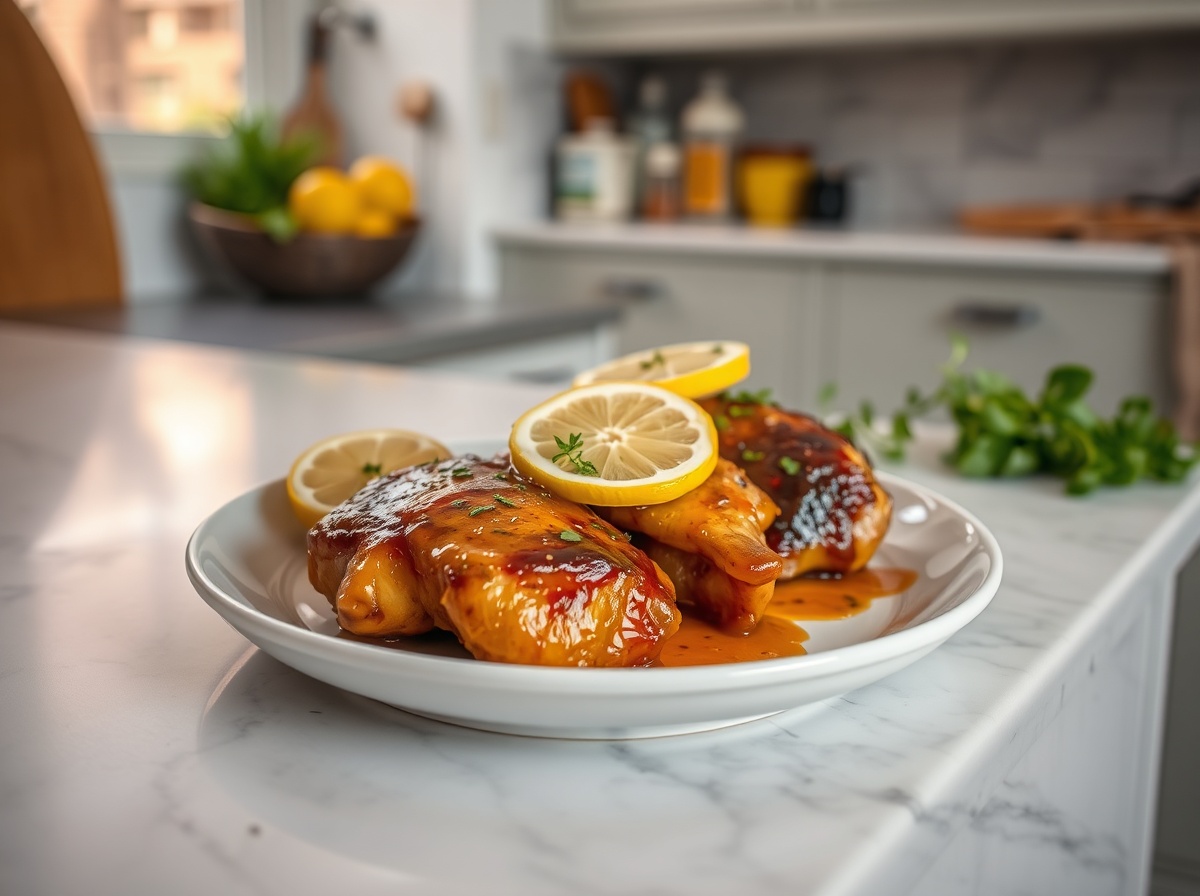
Gordon Ramsay sticky lemon chicken recipe
Rate this RecipeIngredients
Equipment
Method
- In a mixing bowl, combine honey, soy sauce, minced garlic, lemon juice, and black pepper.
- Add the chicken pieces to the bowl and marinate for at least 10 minutes.
- Preheat your air fryer to 200°C.
- Place the chicken in the basket, spray lightly with olive oil, and cook for 15 minutes.
- After 15 minutes, turn the chicken pieces over and cook for an additional 5 minutes or until crispy and cooked through.
Nutrition
Notes
Tried this recipe?
Let us know how it was!Common Cooking Pitfalls and Their Solutions
Overheated pan
This can scorch the chicken skin before it cooks through. Start at medium heat and adjust as necessary to achieve a steady sizzle without burning.
Excess surface moisture
Water on the chicken skin will prevent proper browning. Pat the chicken dry with paper towels before seasoning to ensure a crisp finish.
Flipping too often
Constantly moving the chicken prevents effective caramelization. Flip the chicken once its surface is deeply golden, allowing a rich crust to develop.
Insufficient resting time
Cutting right after cooking leads to dry meat. Allow the chicken to rest for at least 5-10 minutes so the juices redistribute for maximum flavor.
Techniques to Elevate Your Dish
Choosing a heavy cast-iron skillet retains heat effectively and promotes even cooking, crucial for perfect browning. Introducing herb-infused butter towards the end of cooking enriches the dish; spoon it over the chicken repeatedly to amplify flavor.
Ensure the chicken reaches room temperature before cooking for optimal grilling results—this promotes even doneness. Resting is key; let the chicken sit for about 10 minutes after cooking to lock in moisture and enhance flavor before slicing. When cutting, slice against the grain to maintain tenderness and juicy bite-sized pieces.
Proven Flavor Enhancements
Garlic infusion
Add crushed garlic cloves to the pan while searing. This will infuse the chicken with robust flavor, creating a savory foundation for the sauce.
Honey glaze
Incorporate honey into your sticky lemon sauce near the end of cooking. This will add a beautiful caramelized finish and balance the acidity of the lemon.
Fresh herbs
Garnish with chopped fresh herbs like parsley or thyme just before serving. Their bright notes will elevate the dish, providing a fresh contrast to the richness of the chicken.
Chili flakes
Add a pinch of chili flakes to the sauce for a subtle heat. This can be incorporated right after the lemon juice for a punchy flavor that balances the sweetness.
Proper Storage and Reheating Guide
For fridge storage, keep the chicken in an airtight container for up to three days to ensure freshness and safety. When ready to reheat, place it in a preheated oven at 350°F until warmed through, which helps maintain its texture; avoid microwave methods that can dry it out.
Leftover sticky lemon chicken can transform into a delicious salad topping or be shredded for use in tacos with a zesty lime slaw. It can also be incorporated into a savory pasta dish, tossing the shredded chicken with olive oil, garlic, and veggies for a quick meal.
Clarifying Cooking Questions
Can I use any oil for cooking the chicken?
While you can use various oils, opt for high-smoke point oils like canola or avocado for better searing without burning. Olive oil is fine but should be used in moderation if cooking at high temperatures.
How long should I let the chicken rest after cooking?
Let the chicken rest for at least 5-10 minutes to allow the juices to redistribute. This will ensure that each bite is moist and flavorful, achieving that restaurant-quality finish.
What cut of chicken is best for this recipe?
Boneless, skin-on chicken thighs deliver great flavor and moisture; they are less likely to dry out than chicken breasts. If you prefer breasts, be mindful of cooking time to avoid overcooking.
Is it necessary to use fresh lemon juice?
Freshly squeezed lemon juice provides a brighter flavor than bottled juice, making a significant difference in your sauce. Use it for optimal taste and acidity balance to complement the dish.
Can I make this dish in advance?
Yes, you can prepare the sticky lemon chicken ahead of time, but it is best enjoyed fresh. If needed, refrigerate, and reheat as instructed to preserve texture and taste.
Mastering Precision in Cooking
With these techniques, you can confidently execute Gordon Ramsay’s sticky lemon chicken recipe to perfection. This method translates high-level culinary skills into your own kitchen, enabling you to consistently produce restaurant-quality meals. There’s no reason to second-guess your cooking when you can apply these principles with precision. Step forward, take charge, and let your cooking do the talking.