Gordon Ramsay Mushroom Risotto is an experience unlike any other dish you can prepare at home. The first time I attempted to make it, my confidence soared as I thought I could easily replicate that restaurant-level creaminess. Yet, with one swift spoonful, the reality hit—my risotto was a mushy mess. Rice was stuck together, lifeless, and not a hint of the vibrant flavors I had envisioned. It was a humbling moment, as I learned the hard way that technique trumps all in the kitchen.
But then, something clicked. I noticed how the heat controlled the cooking process, how the rice should softly dance in the broth rather than drown. The sizzle of shallots meeting butter, the intoxicating aroma of mushrooms caramelizing—it ignited a desire to master this dish. I realized that mastering Gordon Ramsay’s technique for risotto isn’t just about following a recipe; it’s about cultivating an understanding of timing, temperature, and flavor development. I promise, by the end of this guide, you’ll transform your kitchen into a mini-Ramsay restaurant.
The Truth About Gordon Ramsay Mushroom Risotto and Why Most Fail
Underestimating the Heat: Many home cooks start with the heat too high. Proper risotto requires a controlled simmer. If the heat is too aggressive, you’ll have grains on the outside that overcook while the inside remains firm.
Ignoring the Stock Temperature: Using cold stock is a rookie mistake. If you add cold liquid to a hot pan, you shock the rice, disrupting the cooking process and robbing it of its creamy texture.
Failing to Stir Constantly: Risotto demands attention. Stirring isn’t just about mixing; it’s about ensuring that each grain of rice is coated and cooked evenly. Skimp on this, and you’ll find your dish lacks depth and consistency.
Timing the Finish Incorrectly: You must know when to stop cooking. Risotto continues to cook even off the heat, known as carryover cooking. Pull it off the flame before it reaches the perfect creaminess, or you’ll end up with an overcooked, sticky mess.
Neglecting to Rest: Many overlook the resting phase once the risotto is cooked. Letting it sit for a couple of minutes allows flavors to meld and ensures a perfect consistency. Skipping this step can lead to a soupy result.
Ramsay’s Culinary Philosophies That Elevate His Risotto
Gordon Ramsay stands firm on one crucial principle: “color equals flavor.” His risotto is a testament to this belief, as the browning of onions and mushrooms develops a rich base that’s essential to the dish. He emphasizes precision in heat control, advocating for a medium simmer that allows the rice to slowly absorb the liquid without breaking apart. His mantra on basting also highlights that distractions don’t belong in the pan; every stir should be purposeful to build layers of flavor.
Personal Adaptations for My Home Kitchen
When I take on Gordon Ramsay Mushroom Risotto, I keep the fundamentals intact. The quality of the ingredients, especially the rice and mushrooms, is non-negotiable. However, I tend to play with the type of pan I use, sometimes opting for a wider skillet instead of a heavy pot. This encourages better evaporation and a creamier texture.
I also may adjust the finishing method with butter—often adding an extra dollop at the end to make the dish silkier. For aromatics, I like to introduce a hint of white wine along with the stock, which elevates the flavor profile further without being overpowering. While I rely primarily on touch to gauge doneness, I also keep a thermometer on hand to ensure I hit that sweet spot of about 200°F during the cooking process. There are times I’ll break the so-called rules and mix in different wild mushrooms or herbs, precisely because cooking should be an expression, not just a replicable formula.
Ingredients for Gordon Ramsay Mushroom Risotto
Main ingredients:
- Arborio rice
- Fresh mushrooms (such as cremini or porcini)
- Shallots
- Garlic
- Chicken or vegetable stock
- Unsalted butter
- Fresh Parmesan cheese
- Olive oil
- Sea salt
- Fresh herbs (such as thyme or parsley)
Optional finishing additions:
- White wine
- Extra Parmesan for serving
- Freshly ground black pepper
Method for Making Gordon Ramsay Mushroom Risotto
Start by heating your chicken or vegetable stock in a separate pot and keep it at a simmer. This isn’t just for heating the liquid; it ensures a consistent temperature throughout the cooking process.
In your chosen wide skillet, heat a splash of olive oil along with a tablespoon of butter over medium heat. Add finely chopped shallots and sauté until they turn translucent, releasing their aromatic sweetness. This takes about 2-3 minutes.
Throw in minced garlic and chopped mushrooms, stirring frequently until they take on a nice golden color and their moisture evaporates—around 5 minutes. This is where depth begins.
Add the Arborio rice to the pan, stirring it in with the mushrooms and shallots. Toast the rice for about 1-2 minutes, ensuring every grain is coated in that flavorful mixture. You want the edges of the rice to appear slightly translucent; this step is vital for unlocking the natural starches that will create that signature creaminess.
Next, pour in a half cup of white wine, if you’re using it. This step is crucial for flavor development. Keep stirring until most of the wine evaporates, allowing those rich notes to concentrate.
Gradually add the warm stock, one ladle at a time, stirring continuously. This constant motion is non-negotiable; it ensures the rice releases its starches, leading to that iconic creamy texture. Allow the rice to absorb the liquid before adding more. Repeat this process until the rice is al dente—around 18-20 minutes.
Once the rice has reached that perfect texture, pull the pan from the heat and stir in the remaining butter and fresh Parmesan cheese. The residual heat will melt the cheese and further develop the creamy consistency.
Let your risotto rest for about 2-3 minutes before serving. This resting period allows the flavors to meld beautifully. When you’re ready to plate, finish with a final touch of freshly grated Parmesan and a sprinkle of herbs. Enjoy the fruits of your labor and relish the fact that you’ve replicated a Gordon Ramsay Mushroom Risotto right in your own kitchen.

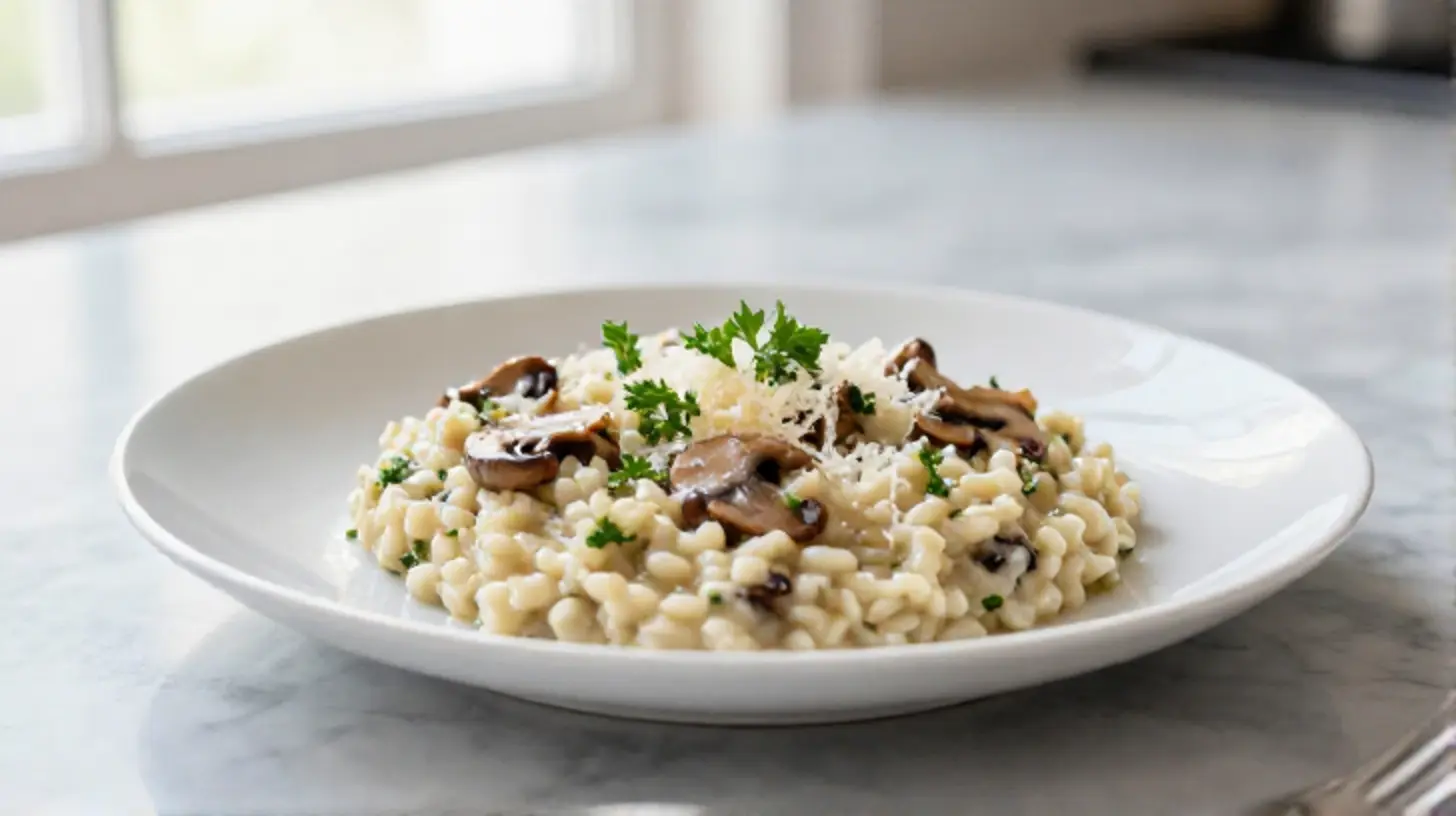
Gordon Ramsay Mushroom Risotto
Rate this RecipeIngredients
Equipment
Method
- In a large pot, heat the olive oil over medium heat. Add the chopped onion and sauté until translucent.
- Add the minced garlic and sliced mushrooms, cooking until the mushrooms are tender.
- Stir in the arborio rice and toast for a couple of minutes, then pour in the white wine, if using.
- Begin adding the warm vegetable broth one ladle at a time, stirring frequently until the liquid is absorbed.
- Continue this process until the rice is creamy and al dente, which should take about 18-20 minutes.
- Remove from heat and stir in the butter and grated parmesan cheese. Season with salt and pepper to taste.
- Let it rest for a couple of minutes before serving.
Nutrition
Notes
Tried this recipe?
Let us know how it was!Enhancing Risotto with Gordon Ramsay’s Culinary Inspirations
To balance your mushroom risotto with something fresh, consider pairing it with perfectly baked salmon, which complements the dish’s creaminess nicely.
If you’re looking to enrich your flavor palette, a bowl of Gordon Ramsay chicken soup serves as a delightful accompaniment, bringing warmth and depth to your meal.
For those interested in variations, try incorporating cheese risotto elements to enhance the creaminess and add unique flavor dimensions to your mushroom risotto.
Common Mistakes and Their Fixes
Underheating the pan
If your pan isn’t hot enough, the risotto won’t develop the right depth of flavor. Preheat the pan thoroughly before adding the oil and mushrooms to achieve maximum caramelization.
Excess moisture in the ingredients
If the mushrooms are wet, they will steam instead of sautéing, resulting in a soggy risotto. Pat the mushrooms dry with a paper towel before adding them to the pan to ensure proper browning.
Constant stirring
Regular stirring is necessary, but overdoing it can lead to broken grains and a gluey texture. Stir only enough to release starch and maintain a creamy consistency while allowing some grains to remain intact.
Insufficient resting time
Serving risotto too soon can lead to a lack of creaminess and cohesion. Allow it to rest for a couple of minutes after cooking, which helps the flavors meld and the texture to settle.
Advanced Techniques for Perfect Risotto
When selecting your pan, opt for a heavy-bottomed stainless steel or cast iron skillet for even heat distribution. This prevents hotspots that can scorch your risotto, ensuring a consistent cooking temperature throughout the process.
Incorporate butter basting towards the end of cooking for an enriched flavor and silky finish. As you fold in the butter, do it in stages, allowing each addition to emulsify into the risotto for that luxurious texture.
Ensure your mushrooms and any other ingredients are at room temperature before adding them to the hot pan for more effective searing. Cold ingredients can shock the pan, resulting in uneven cooking and flavor release.
After cooking, always let your risotto rest for about three minutes before serving. This step allows the starches to fully activate and gives you that desired creamy texture without being overly runny.
When serving, slice through any garnishes or toppings in a direction that complements the flavor profile of the risotto. This enhances taste distribution with each bite, elevating your dish from good to exceptional.
Elevating Your Risotto with Flavor Profiles
Saffron infusion
Adding saffron lends a unique, earthy flavor with stunning color. Incorporate it with the broth at the beginning, allowing its essence to infuse while the risotto cooks.
Truffle oil drizzle
This premium oil enhances the savory notes of the mushrooms and adds an aromatic luxury. Drizzle it on just before serving to maintain its delicate flavor appeal.
Cheese blend
Mixing different cheeses, such as Parmesan with a touch of Gorgonzola, creates a rich, complex umami flavor. Add the cheese at the end, allowing it to melt and harmonize without overpowering the dish.
Herb finish
Finishing with fresh herbs like thyme or chives brightens the flavor and adds a pop of freshness. Fold them in right before serving to ensure their vibrancy is preserved.
Proper Storage and Reutilization Techniques
Store leftover mushroom risotto in an airtight container in the fridge for up to three days. Make sure to let it cool to room temperature first to prevent condensation, which can make it soggy.
When reheating, add a splash of broth or water in a saucepan over low heat to restore creaminess, stirring frequently to prevent sticking. Alternatively, use a microwave with a covered bowl and intervals to evenly warm.
For leftover risotto, consider transforming it into arancini by shaping the cooled rice into balls, coating with breadcrumbs, and frying them. Another idea is using it as a filling for stuffed peppers, or as a base for a savory mushroom casserole, maximizing both flavor and utility.
Direct Answers to Common Questions
Can I use olive oil in risotto?
Yes, olive oil can be used, but choose a high-quality extra virgin oil for best results. Its flavor can enhance the overall dish but should be balanced with butter for richness.
How long should I let risotto rest before serving?
Resting risotto for about three minutes after cooking allows the flavors to meld and the texture to set. This brief period helps avoid a runny consistency upon serving.
What cut of mushrooms works best in risotto?
Cremini or shiitake mushrooms provide robust flavor and texture. They hold up well during cooking and add depth to the overall dish without being too overpowering.
Is it necessary to constantly stir risotto?
While stirring is crucial to release starch and achieve creaminess, over-stirring can make the dish gummy. Aim for a balance, stirring enough to keep the risotto cooking evenly without breaking the grains.
What should I do if the risotto is too thick?
If the risotto becomes too thick, gradually add hot broth or water, stirring until you reach the desired consistency. Always do this in small amounts to ensure it doesn’t become too soupy.
Mastering Risotto in Your Home Kitchen
It’s time to elevate your cooking game with this technique; master the fundamentals, and your mushroom risotto will reach restaurant quality. Stop second-guessing and cook with precision, confident in your ability to produce dishes that impress. Embrace the craft—commit to excellence in every bowl.